
The orthoptic clinic: what to expect
5 min read · Updated 2026-08-18
The orthoptic clinic is the specialist consultation for children's binocular vision: it checks whether both eyes work together. We offer it every weekday – here is what you and your child can expect.
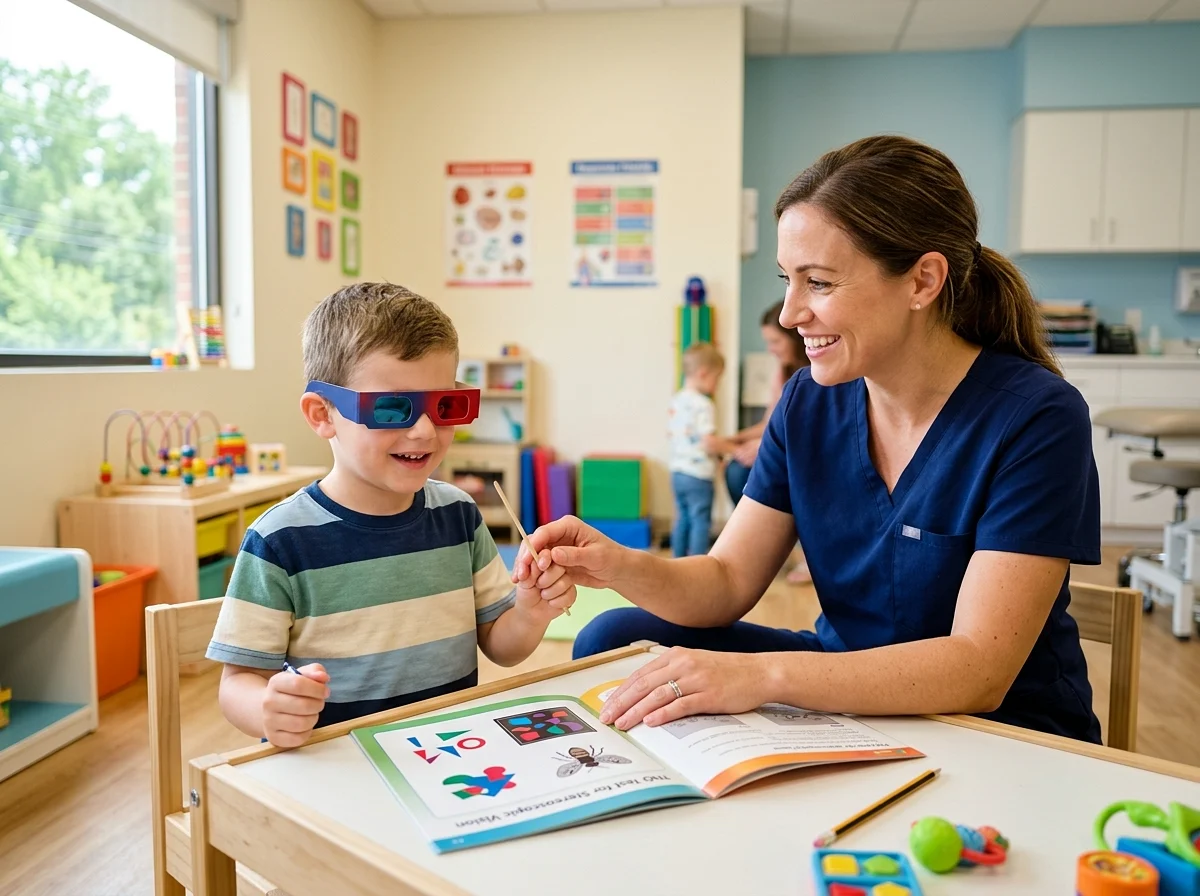
What is an orthoptic clinic?
It is not a school and not classroom training, but the specialist consultation for binocular vision. It is run by the orthoptist, the specialist for squint, lazy eye and disorders of eye movement, working closely with the ophthalmologist who makes the diagnosis and decides the treatment.
When is an appointment useful?
- The child has a squint, constantly or intermittently.
- The head is held tilted or one eye is closed.
- One eye seems to see worse than the other.
- Headaches, reading difficulties or rapid fatigue during close work.
- Squint, lazy eye or strong refractive errors in the family.
- As a check before starting kindergarten or school.
The appointment step by step
We start with a conversation: pregnancy and birth, development, your everyday observations and eye conditions in the family. The examination then follows, adapted to your child's age and pace.
- Visual acuity: with pictures, numbers or letters; in babies through gaze behaviour.
- Cover test: shows whether and how strongly an eye deviates.
- Eye movements: the eyes follow a target in all directions.
- Three-dimensional vision: polarised tests show whether both eyes form a common image.
- Refraction: measured without contact, in small children with the Plusoptix from about one metre.
- Medical examination: the front of the eye and the retina, usually after dilating drops.
Duration, drops and costs
Allow 45 to 90 minutes. If dilating drops are used, add roughly 30 minutes of waiting time until they work. Afterwards your child will see blurred up close and be light-sensitive for a few hours.
The orthoptic clinic is covered by Swiss basic health insurance and billed according to Tarmed. Statutory contributions towards children's glasses apply up to the age of 18.
How to make the visit relaxed
- Choose a time when your child is well rested.
- Explain at home that somebody will look into their eyes – no needles, no pain.
- Pack glasses, reports and the insurance card.
- Bring sunglasses or a cap for the way home after the drops.
- Plan nothing demanding afterwards – reading and screens are hard for a few hours.
Frequently asked questions
How often does my child need an orthoptic appointment?
It depends on the findings. During ongoing amblyopia treatment, checks every few months are usual; with normal findings a check before school entry is generally enough.
On which days is the orthoptic clinic held?
We offer orthoptics every weekday. Appointments are available at short notice – the fastest way is to call 044 251 11 21.
Does the examination hurt?
No. All tests are contact-free or playful. Only the eye drops sting slightly for a few seconds.